
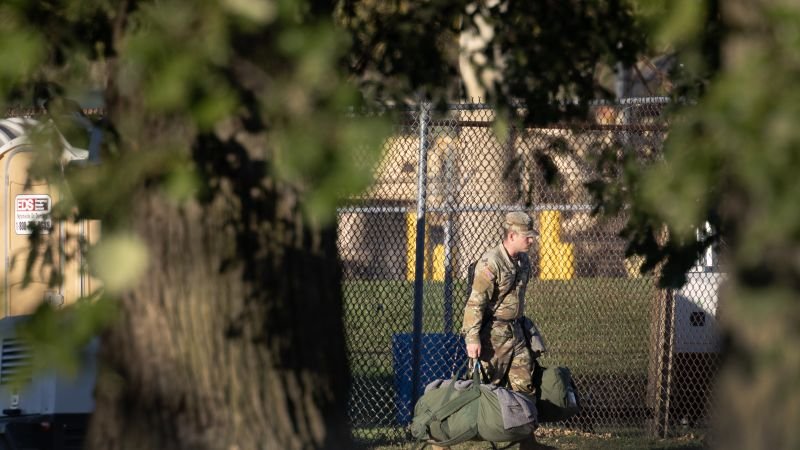

The Supreme Court's decision to block President Trump from using a specific federal law to deploy the National Guard into American cities could lead to a renewed debate about invoking the Insurrection Act. This 19th-century law would grant the president broader authority to use the regular military domestically, potentially circumventing the restrictions of the Posse Comitatus Act. Trump and his aides had previously expressed interest in using the Insurrection Act for domestic purposes.

The Supreme Court's ruling focused on Trump's attempt to federalize members of the Illinois National Guard under a law allowing a president to call up the guard if unable to execute laws with "regular forces." The majority ruled Trump had not met the requirements of that specific law, though a footnote from Justice Kavanaugh indicated the decision did not directly address the Insurrection Act. This leaves open the possibility that the administration might consider using the U.S. military instead of the National Guard to protect federal property and personnel.
Historically, the Insurrection Act has been invoked sparingly, most notably by President George H.W. Bush during the 1992 Los Angeles riots and by President Dwight Eisenhower in 1957 to enforce school desegregation in Little Rock. Invoking the Insurrection Act could present a more politically charged scenario, potentially involving the deployment of regular military units with heavy equipment, as opposed to the National Guard. Legal experts suggest that the available legal avenues for deploying federal forces domestically are limited, and attempts to use the Insurrection Act might face similar legal challenges. Despite a perceived easing of tensions on the ground in some affected cities, the administration had argued for the continued necessity of deployments.