

Martin Luther King Jr. Day was observed across the United States with various events, but the celebrations were overshadowed by current concerns regarding racial and social equality, as well as the Trump administration's actions, particularly in Minneapolis. During a rally in Harlem, Rev. Al Sharpton highlighted the recent death of Renee Good, a mother of three killed by an immigration officer, questioning the justification for lethal force and criticizing the deployment of National Guard and ICE agents as actions Dr. King would have opposed. Sharpton urged for unity to combat adversarial interests and to uphold King's dream.
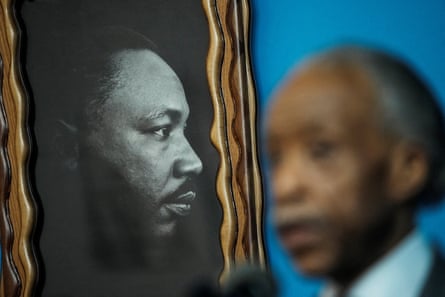
New York City Mayor Eric Adams addressed the MLK Day celebration at the Brooklyn Academy of Music, framing inequality as an economic issue and emphasizing that King's legacy is not just about rights granted, but rights that people can actively exercise. In Washington D.C., hundreds marched to honor King, with participants stressing that the "struggle continues" and that King's fight was for all people. The NAACP's senior national director of advocacy, Wisdom Cole, noted that heightened fears in diverse and immigrant communities have lent a more urgent tone to King Day observances due to increased police and state violence.
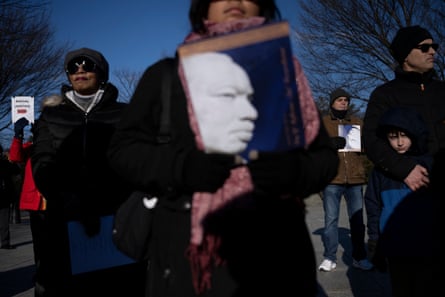
The Movement for Black Lives organized events under the theme "Reclaim MLK Day of Action," advocating for reclaiming King's radical legacy and taking action to protect one another and resist what they termed a "fascist regime." At the National Civil Rights Museum in Memphis, free admission was offered, with the museum's president, Russell Wigginton, stating the importance of recognizing those who continue to realize King's ideals. However, some typical MLK Day events were canceled, with a Black Student Union at Indiana University expressing concern that a canceled dinner was linked to "budget constraints" and potential "broader political pressures." Similarly, a church in Westbrook, Maine, canceled an MLK Day service due to the presence of ICE agents in the area.
These observances occurred a year after Donald Trump's second inauguration, during an administration seen as opposing diversity, equity, and inclusion (DEI) initiatives. The Justice Department's Civil Rights Division has shifted its focus, and Trump has made statements suggesting that civil rights protections and affirmative action have negatively impacted white people. The administration has also conducted aggressive anti-immigration operations in several cities. Maya Wiley, president and CEO of The Leadership Conference on Civil and Human Rights, stated that the administration's priorities indicate an effort to dismantle the social justice movement, impacting crucial aspects of a "beloved community" that King advocated for. The National Park Service also announced changes to free admission days, now excluding King Day and Juneteenth in favor of Flag Day, which coincides with Trump's birthday. At Ebenezer Baptist Church in Atlanta, Senator Raphael Warnock urged unity against injustice, criticizing the administration for attempting to "weaponize despair" and emphasizing that remembering Dr. King requires upholding his entire legacy.