
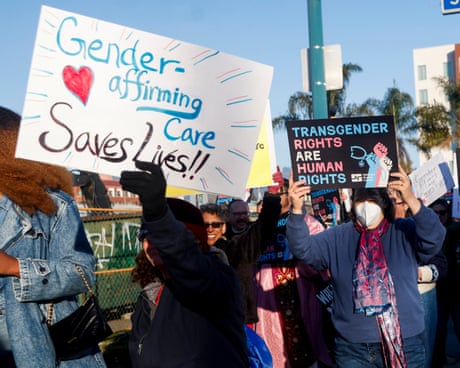
Health workers and advocates are strongly opposing two recently introduced House bills, HR 498 and HR 3492, which aim to restrict gender-affirming care for children across the United States. These bills mark the first instance of Congress voting on national bans concerning such care, signaling a significant intensification of anti-trans rhetoric from conservative lawmakers.
One of the bills, introduced by Marjorie Taylor Greene as one of her final legislative actions before retirement, seeks to make providing gender-affirming care to individuals under 18 a federal felony, punishable by up to 10 years in prison. This particular bill successfully passed the House with a vote of 216-211, including three Democratic votes, making it the most substantial federal attempt to limit healthcare for children in the US. However, it is widely considered improbable that this bill will pass the Senate. The second bill, introduced by Dan Crenshaw, proposes to ban Medicaid coverage for gender-affirming care for children, which would deny transgender children on Medicaid access to essential treatments like puberty blockers, hormone therapy, and surgical care, while cisgender children would still have access to similar care.
Advocates, including Nicholas Mitchell, who engaged with congressional staffers, and organizations like the Human Rights Campaign, emphasize that these bills would harm people and criminalize both parents and healthcare providers for following medical best practices. They argue that the government should not interfere with personal healthcare decisions made by patients, parents, and providers, asserting that this is a fundamental right for all Americans, including transgender individuals and their families. Concerns have also been raised regarding the potential for an increase in youth suicide and confusion among medical professionals about the care they can legally provide if such bans are enacted.