
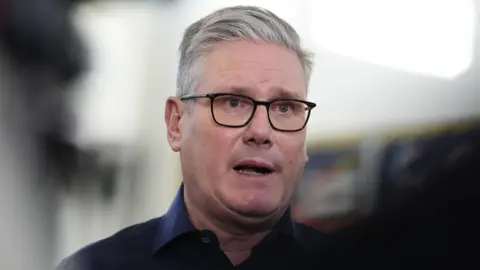
Sir Keir Starmer's strategy regarding the US action in Venezuela has been to avoid public criticism of President Trump, a move that aligns with his broader approach to managing relations with the US president. While Labour's manifesto states a commitment to the international rule of law, Starmer's public response to the seizure of Venezuelan President Nicolás Maduro and his wife was notably reserved, focusing on a "transition of power" rather than the methods employed. This circumspect language is a deliberate tactic, calculated to prevent public spats with Trump and to maintain a pragmatic, strong relationship with the White House. Supporters believe this cautious approach has yielded tangible benefits for the UK, such as a trade deal that protected jobs.
However, this strategy has drawn criticism from opposition parties, including the Liberal Democrats, SNP, and Green Party, as well as from some Labour backbenchers. Critics argue that Starmer's phrasing, suggesting it is "for the US to justify the actions it has taken," effectively allows Trump to self-assess. Conversely, Conservative figures and some of their backbenchers generally support the government's position, believing that public criticism of the White House is not in the UK's best interests. Within the Labour Party, while there is some unease about the cautious response, a significant opposition to Downing Street's stance has not yet materialized, with some MPs acknowledging Trump's unpredictable nature and Starmer's need for a careful approach.