
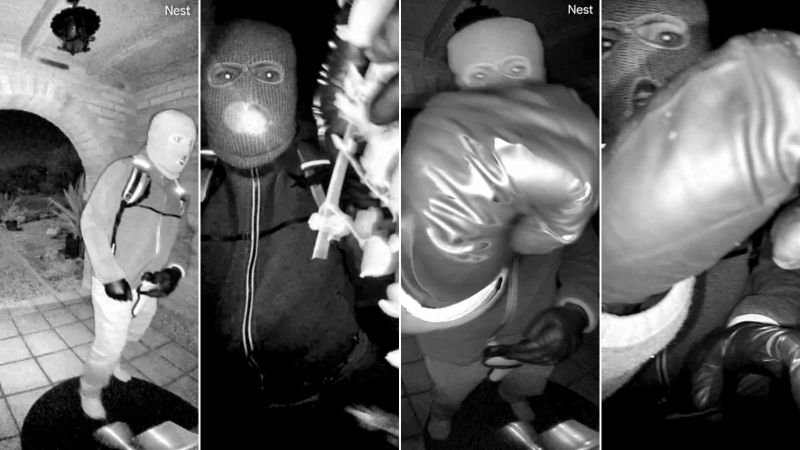

Google's technical expertise was crucial in recovering video footage related to the disappearance of Nancy Guthrie, mother of "Today" host Savannah Guthrie. Initially, authorities stated that the video from her Nest cameras was unavailable because she lacked a subscription to Google's cloud recording service. However, Google engineers, who own Nest, successfully recovered several days' worth of "event-based" video history, which Nest saves for free before deletion. This process was technically complex, and its success was uncertain. The recovered footage showed a masked and armed individual outside Guthrie's door on the day she went missing.
The recovery was possible because even deleted files can persist on servers until overwritten. Nick Barreiro, a forensic analyst, explained that a delete function merely marks the space as available, and the data remains recoverable until new data occupies that space. The FBI, working with Google, retrieved the video from "residual data located in backend systems" after obtaining a search warrant for the cameras.
The data from cloud-based security systems like Nest passes through numerous components and servers for processing and storage. According to Adam Malone, a cybersecurity expert, each of these layers presents an opportunity for data recovery, as residual data might remain in processing queues or storage. Investigators explored these various systems to find any historical data that had not yet been purged.